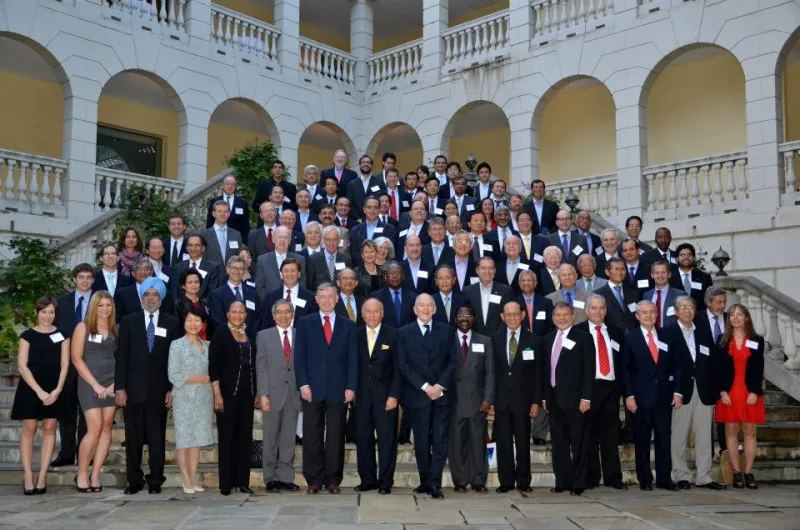
Beyond Borders: How American Executives Are Rewriting the Rules of Cross-Cultural Leadership
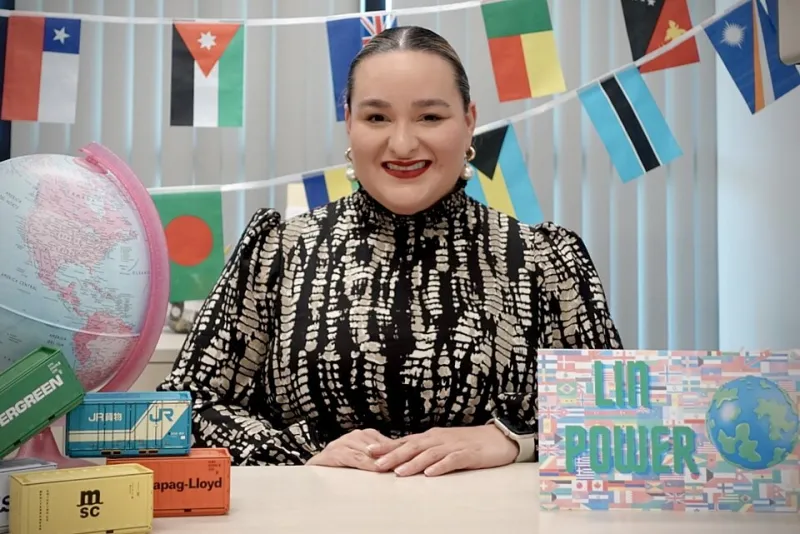
Photo: Intercultural Leadership, CC BY-SA 4.0, via Wikimedia Commons
For decades, American business culture exported its management philosophy to the world with considerable confidence. Hierarchies were flattened, direct communication was celebrated, and the quarterly earnings cycle became a universal drumbeat. Yet as organizations have grown increasingly distributed—spanning continents, time zones, and deeply distinct cultural traditions—many US executives are confronting an uncomfortable truth: the leadership toolkit that built domestic success does not automatically translate across borders.
In 2024, that reckoning has moved from the periphery of executive conversation to its very center.
The Shifting Terrain of Global Team Management
The statistics are difficult to ignore. According to data from Deloitte's Global Human Capital Trends report, more than 70 percent of multinational organizations now operate with teams distributed across at least five countries. For American companies in the Fortune 500, that figure climbs even higher. Yet despite this geographic expansion, leadership development programs at many US firms remain predominantly domestically focused.
The consequences of this gap are measurable. McKinsey research has consistently linked cultural misalignment—not strategic miscalculation—as one of the primary drivers of international expansion failures. When a Chicago-based VP of Operations misreads the deference shown by her Singapore counterpart as agreement rather than politeness, the resulting miscommunication can quietly derail months of careful planning.
"We spent the better part of two years assuming that silence in our global calls meant consensus," shared one senior executive at a major US technology firm during a recent ISFC World roundtable. "It wasn't until we restructured our feedback channels entirely that we understood how much valuable input we had been inadvertently shutting out."
Cultural Intelligence as a Core Executive Competency
What distinguishes the most effective global leaders emerging in 2024 is not simply international experience—it is what researchers call Cultural Intelligence, or CQ. Originally developed by scholars Christopher Earley and Soon Ang, CQ measures an individual's capacity to function effectively across culturally diverse settings. Unlike IQ or even emotional intelligence, CQ is widely regarded as a learnable skill, which has made it an increasingly attractive focus for corporate leadership development.
Organizations such as IBM, Procter & Gamble, and Colgate-Palmolive have embedded CQ assessments into their executive promotion processes. The results, according to internal HR data shared at recent global leadership conferences, have been notable: leaders with higher CQ scores demonstrate stronger retention rates on international teams and generate measurably better collaboration outcomes.
For US executives accustomed to a culture that prizes assertiveness and explicit communication, developing CQ often requires a deliberate reorientation. In many East Asian and Middle Eastern business environments, for example, relationship-building precedes transactional conversation—sometimes by weeks or months. Pushing toward an agenda before trust is established can signal disrespect, regardless of intent.
Practical Frameworks Gaining Traction
Several structured approaches have gained traction among American executives navigating these challenges.
The Cultural Mapping Exercise involves systematically documenting the communication norms, decision-making hierarchies, and conflict-resolution styles prevalent in each country where a team operates. Rather than relying on generalized assumptions, this exercise is conducted with input from local team members themselves, creating a living document that evolves as teams grow.
Asynchronous Inclusion Protocols address one of the most persistent structural inequities in global teams: the meeting schedule. When headquarters is in New York, a 9 a.m. EST standup is routine. For colleagues in Mumbai, that same call falls at 7:30 p.m. Leading organizations are now rotating meeting times, recording all sessions, and creating documented decision trails so that no regional team carries a disproportionate communication burden.
Local Leadership Amplification represents perhaps the most significant philosophical shift. Rather than deploying US-based managers as the primary authority figures in international offices, forward-thinking companies are investing in developing regional leaders who possess both local cultural fluency and alignment with organizational strategy. This model, embraced by companies including Johnson & Johnson and Mastercard, distributes leadership authority in ways that build trust and reduce the cultural friction inherent in top-down expatriate management.
Case Study: A Midwest Manufacturer's Transformation
One instructive example comes from a mid-sized industrial manufacturer headquartered in Ohio that expanded operations into Vietnam and Mexico simultaneously in 2021. Initial productivity metrics were disappointing, and turnover in both locations was high. Exit interviews revealed a consistent theme: employees felt their managers did not understand local context and were applying rigid US-centric expectations to culturally distinct workforces.
The company responded by enrolling its entire senior leadership cohort in a 12-month cross-cultural leadership program developed in partnership with an international business school. The curriculum combined CQ assessment, immersive country-specific workshops, and regular structured conversations with local team leads. Within 18 months, voluntary turnover in both international facilities had dropped by nearly 40 percent, and output targets were consistently met.
"The program forced us to examine assumptions we didn't even know we were making," the company's Chief People Officer noted. "We thought we were being consistent. Our teams abroad experienced that consistency as indifference."
The Road Ahead for Global Leadership
The global business environment of 2024 rewards leaders who possess not just strategic vision, but the interpersonal and cultural sophistication to execute that vision across diverse human landscapes. For American executives, this moment represents both a challenge and a significant professional opportunity.
Organizations that invest in building genuine cross-cultural competency at the leadership level are demonstrating stronger international revenue performance, higher employee engagement scores, and greater resilience during periods of geopolitical uncertainty. Those that continue to treat cultural adaptation as a secondary concern—something to be handled by HR rather than championed by the C-suite—are increasingly finding themselves at a competitive disadvantage.
At ISFC World, we believe that connecting global leaders means more than facilitating transactions across time zones. It means fostering the kind of deep organizational intelligence that turns cultural diversity from a management challenge into a strategic asset. The executives who internalize that principle are not simply adapting to a new global reality—they are actively shaping it.